
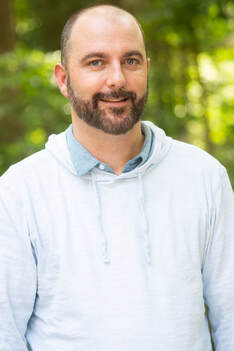
CJ Jung once wrote, “Until you make the unconscious conscious, it will direct your life and you will call it fate”. I couldn't agree more. From my perspective, psychodynamic therapy is a powerful means to uncover an awareness of what you might not yet know about yourself. Some of the things outside of your awareness can have a powerful impact you without you even knowing it. Therapy is a wonderful gift you give to yourself that can last long beyond its completion and at its best can change the direction of your life, with more of you in the driver's seat. Finding the right fit is important, and I encourage you to look around my website to see about how I practice. Generally, I work with adults looking to change something in their lives, find direction, or reduce their current suffering. I welcome a wide range of clients into my practice and also have specialized training for various issues (see Treatment Areas below).
Although I agree with Jung's premise, I also believe that insight alone is not enough. Our bodies, not just our conscious minds, need to have an understanding that our past has been impacting us, as well as an ability to fully let go of outdated information. And we need assistance in the form of another person to help guide that process. To that end, I am an active and accessible person during a session that supports a patient towards their desired goals by helping them get direct experience with their bodies and their emotions. Why does this matter? It is my strong conviction that safely experiencing what has been avoided (or has been outside of our awareness) is the single best predictor of whether a psychotherapy will be successful. Recent data, across various psychotherapy models, supports my conviction.
Through my private practice, Tyler Beach LCSW PLLC, I work as a psychotherapist with physical offices in Chapel Hill and Durham, North Carolina. In addition to my practice in North Carolina, I am also licensed to practice in Virginia, and the District of Columbia. Additionally, I am a registered tele-health provider in Florida. For persons in Virginia, DC, and Florida, I offer tele-therapy video, with the option of occasional in-person "block treatments" (several hours in one day). Additionally, I offer training and supervision to other psychotherapists (online and in-person).
Please note that my individual practice is full and I do not anticipate new openings until the Fall of 2024. My waitlist is also full at this time. I am, however, actively accepting new clients for group psychotherapy (please see my Group Psychotherapy Page). If you are interested in interpersonal process group work, or have been referred by a colleague of mine, please also email me.
*Please note that I am able (and very experienced) in providing video-based psychotherapy services via Zoom for persons anywhere in North Carolina, South Carolina, Virginia & DC. This option is also particularly critical right now during the COVID-19 crisis.
Treatment Areas
*Voice mail messages can take me a bit longer to respond to (up to 2 weeks). I highly encourage you to contact me via email (at the bottom of this page).
Although I agree with Jung's premise, I also believe that insight alone is not enough. Our bodies, not just our conscious minds, need to have an understanding that our past has been impacting us, as well as an ability to fully let go of outdated information. And we need assistance in the form of another person to help guide that process. To that end, I am an active and accessible person during a session that supports a patient towards their desired goals by helping them get direct experience with their bodies and their emotions. Why does this matter? It is my strong conviction that safely experiencing what has been avoided (or has been outside of our awareness) is the single best predictor of whether a psychotherapy will be successful. Recent data, across various psychotherapy models, supports my conviction.
Through my private practice, Tyler Beach LCSW PLLC, I work as a psychotherapist with physical offices in Chapel Hill and Durham, North Carolina. In addition to my practice in North Carolina, I am also licensed to practice in Virginia, and the District of Columbia. Additionally, I am a registered tele-health provider in Florida. For persons in Virginia, DC, and Florida, I offer tele-therapy video, with the option of occasional in-person "block treatments" (several hours in one day). Additionally, I offer training and supervision to other psychotherapists (online and in-person).
Please note that my individual practice is full and I do not anticipate new openings until the Fall of 2024. My waitlist is also full at this time. I am, however, actively accepting new clients for group psychotherapy (please see my Group Psychotherapy Page). If you are interested in interpersonal process group work, or have been referred by a colleague of mine, please also email me.
*Please note that I am able (and very experienced) in providing video-based psychotherapy services via Zoom for persons anywhere in North Carolina, South Carolina, Virginia & DC. This option is also particularly critical right now during the COVID-19 crisis.
Treatment Areas
- Mood and Anxiety Disorders
- Problems relating to other people effectively - Enhancing Relationships
- Eating Disorders and/or Body Image Disturbance (particularly Bulimia and Binge Eating)
- Traumatic Experiences (e.g. PTSD, Complex PTSD, Early Childhood Relational Trauma & Neglect)
- Compulsive Behavior
- Continued Personal Growth/Change
- Adjustment Disorders and/or Transitions
- Personality Disorders
- Building "Emotional Intelligence"
*Voice mail messages can take me a bit longer to respond to (up to 2 weeks). I highly encourage you to contact me via email (at the bottom of this page).
